12 April 2026
- Crypto Payroll Systems: The Future of Employee Compensation?
- Proven Debt Management Strategies 2025: Slash Your Debt and Boost Your Credit Score with Proven Tips
- Guide to buying a home in 2025: How Young Adults Can Move from Renter to Homeowner
- Plan Your Dream Retirement: 2025 Guide to Digital Retirement Planning

News












Our site/blogs may contain some affiliate/compensated links, which may earn us a small commission if you make a purchase through our links, at no extra cost to you. Learn more.
The Neuralink Mayhem
Image Source: Evening Standard
Elon Musk’s famous brain chip corp wins over U.S approval to initiate it’s human trial.
On May 25, 2023 Musk’s Neuralink has officially received U.S Food and Drug Administration (FDA) approval for its first-in-human clinical trial, a big victory for the brain-implant startup while it’s still being on the U.S. radar for the handling of animal experiments.
Elon Musk’s neuro-chip company boasts it has gotten a green signal from the US Food and Drugs Administration (FDA) to start its first trials on humans.
The Neuralink AKA brainchip firm wants to help correct vision deficiency and incapacitated mobility issues by linking brains to AI driven supercomputers.
However, not harboring any urgent plans to start selecting willing volunteers.
Musk’s previous ambitions to begin tests came to nothing.
The FDA officially acknowledged and ascertained Neuralink’s big announcement.
Also check our blog post: Changes at Twitter since Elon Musk took over
Bidding to Success
A friendly bid by Neuralink to befriend the FDAs approval was downright put down citing issues with some safety grounds, a report in March says so, that had erstwhile cited a lot of current and former employees working in the firm.
What is Neuralink?
Image Source: Business Today
Neuralink was formed in July 2016.
As a neurotechnology company founded by Musk, who is also the owner of the company.
Aiming to develop implantable brain-machine interfaces (BMIs) that can potentially enhance human cognitive abilities and create a direct interface between the brain and computers.
The firm’s goal is to enable individuals to communicate with technology using their thoughts and to treat neurological disorders.
As a privately owned firm.
Its legal status is that of a corporation.
However, Neuralink’s operating area is primarily focused on the development of neurotechnology and brain-machine interfaces.
What does Neuralink do?
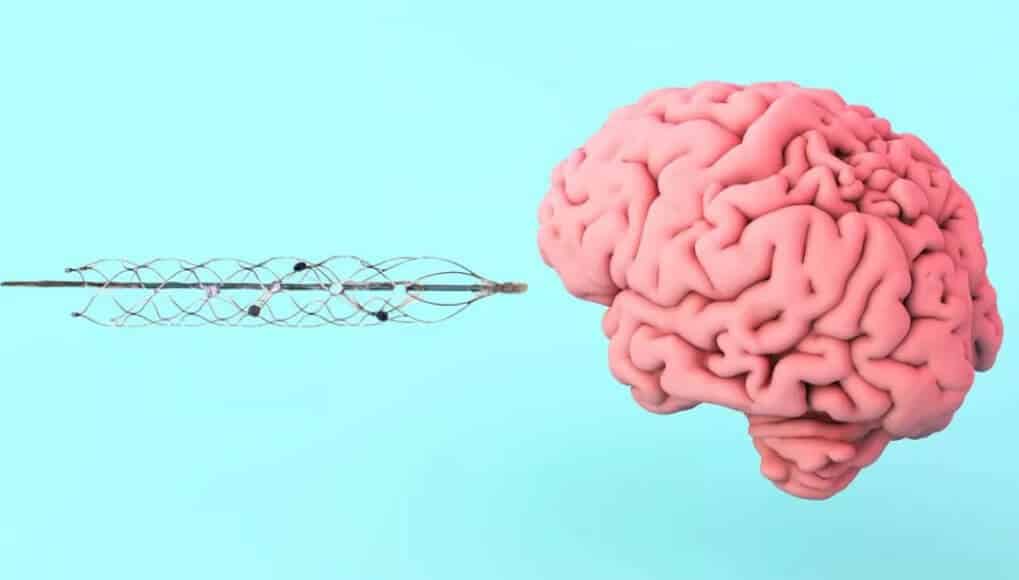
Image Source: CNBC
Neuralink’s brain chip technology, known as the Neuralink device or N1 Link, is designed specifically to create a high-bandwidth connection between the human brain and external devices, such as computers or smartphones.
The core idea behind Neuralink’s technology is to implant tiny, flexible electrode threads into the brain to detect and stimulate neural activity.
The Neuralink device consists of a small implantable chip and a network of ultra-thin electrode threads.
The chip, which is about the size of a coin, contains custom-designed integrated circuits that process and amplify signals from the electrodes.
The electrode threads, thinner than a human hair, are implanted into the brain’s neural tissue using minimally invasive surgical techniques.
The electrodes detect the electrical activity of individual neurons, allowing Neuralink’s system to record and decode neural signals.
These signals can then be processed by external devices, enabling communication between the brain and computers or other devices.
In addition, the Neuralink device can also stimulate neural activity, potentially allowing for the restoration or enhancement of certain brain functions.
However, the ultimate goal of Neuralink’s brain chip technology is to develop advanced brain-machine interfaces that can treat neurological disorders, enhance human cognition, and enable direct interaction between the human brain and technology.
How is Neuralink Chip inserted?
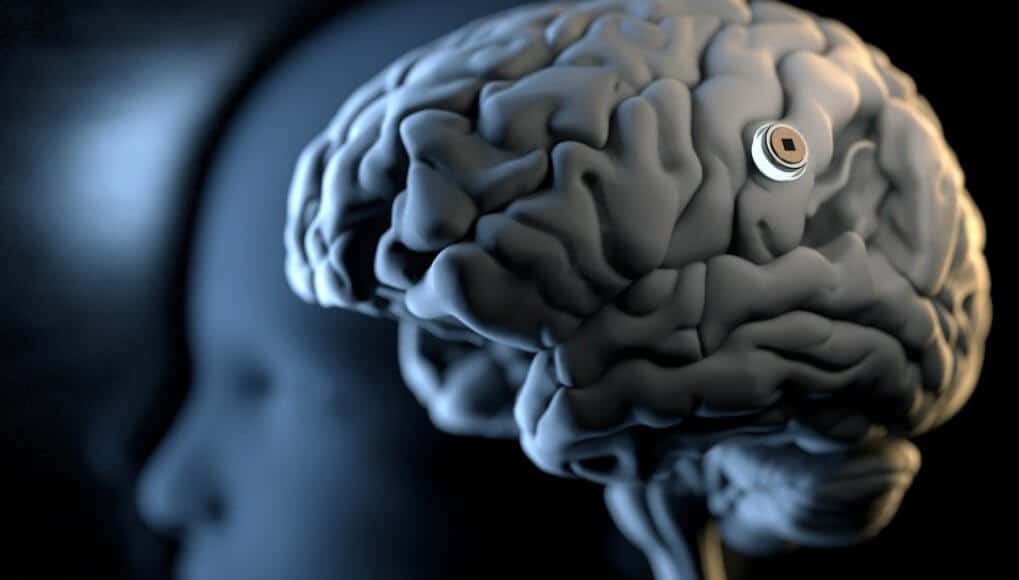
Image Source: Euronews
The Neuralink chip, AKA the N1 Link, is inserted into the body via a surgical procedure.
The implantation process involves several steps:
Incision: A small incision is made in the scalp to expose the surface of the skull. The incision is typically placed behind the ear, where it can be easily hidden by hair.
Skull drilling: A small hole is drilled in the skull to provide access to the brain tissue. The drilling process is performed with precision to minimize damage to the surrounding areas.
Implant insertion: The Neuralink chip, along with a bundle of ultra-thin electrode threads, is gently inserted through the drilled hole and into the brain tissue. The chip is typically placed in a specific region of the brain, depending on the targeted application or disorder.
Electrode placement: The ultra-thin electrode threads, which are attached to the Neuralink chip, are carefully placed into the neural tissue. These electrodes are designed to detect and stimulate neural activity.
Incision closure: After the chip and electrodes are implanted, the incision in the scalp is closed using sutures or surgical staples. Proper wound closure is crucial to ensure healing and minimize the risk of infection.
However, the actual surgical procedure may vary based on the specific requirements of the individual and the targeted brain region.
Neuralink’s goal is to develop minimally invasive techniques to reduce the invasiveness and risks associated with the procedure.
Safety concerns?
The implantation process for the Neuralink chip is a highly complex surgical procedure that requires the expertise of trained medical professionals.
It is crucial that the surgery is performed by skilled neurosurgeons to ensure the safety and efficacy of the implantation.
Company Strength?
Currently hosting a company size of 201-500 as per the updated official LinkedIn status.
The firm was founded by seven scientists, engineers and Musk himself.
Curing diseases and disabilities?
Image Source: FMT
Neuralink initiates the use of its microchips to treat potentially incurable conditions such as paralysis, vision impairment, blindness, helping specially abled people to use computers and mobile technology for empowering their own bodily control and movement.
The brain chips – tested in monkeys – are made to decipher synapses firing in the brain and transmit that data information to connected AI devices wirelessly using Bluetooth sensors.
However, specialists have forewarned that Neuralink’s brain chip implants need extensive testing that’s mandatory to potentially avoid any hazardous technical and ethical errors if they became widely available for public use.
Musk has earlier suggested the propounded tech can alleviate all worries related to humans being replaced by AI.
Official Twitter Announcement
Announcing the good news on Twitter, Neuralink put forth an eulogy “important first step that will one day allow our technology to help many people” unquote, as posted on its official Twitter handle.
The agreement was definitely the finale of the amazing initiative taken up by the Neuralink team in ties with the FDA.
The firm has vowed to release more information “sooner” on its future plans to sign up some willing trial volunteers.
The Brain Chip firm Pledge
Image Source: TechCrunch
The official website pledges that “safety, accessibility and reliability” unquote are all taken into high consideration during all its AI engineering processes.
The brainchip firm – famously co-founded by Musk in 2016 – has infamously and overwhelmingly presumed the speed at which it can actually execute its plans in the real world of regulations, govts and laws.
Goal and Ideation
Its initial goal and ideation was to initiate implanting AI chips in human brains in 2020, to honor a solemn announcement made the year prior.
It was later vouched to be initiated in 2022.
Past Setbacks
The firm has repeatedly dealing with setbacks even back in December last year, after reportedly coming under the radar for trespassing animal welfare violations in its research.
However they had earlier downright rejected any such similar claims.
Parting Thoughts
The drum roll on FDA agreement for real human trials comes shortly after the recent trends of a similar innovation that had shown signs of success involving brain implants designed by Swiss researchers.
An incapacitated man from the Netherlands could miraculously walk by just thinking about it – owing to a complex system of neuro implants wirelessly transmitting his thoughts to his legs, muscles and his feet to start walking again, unbelievable.
Trending News